

Table of contents
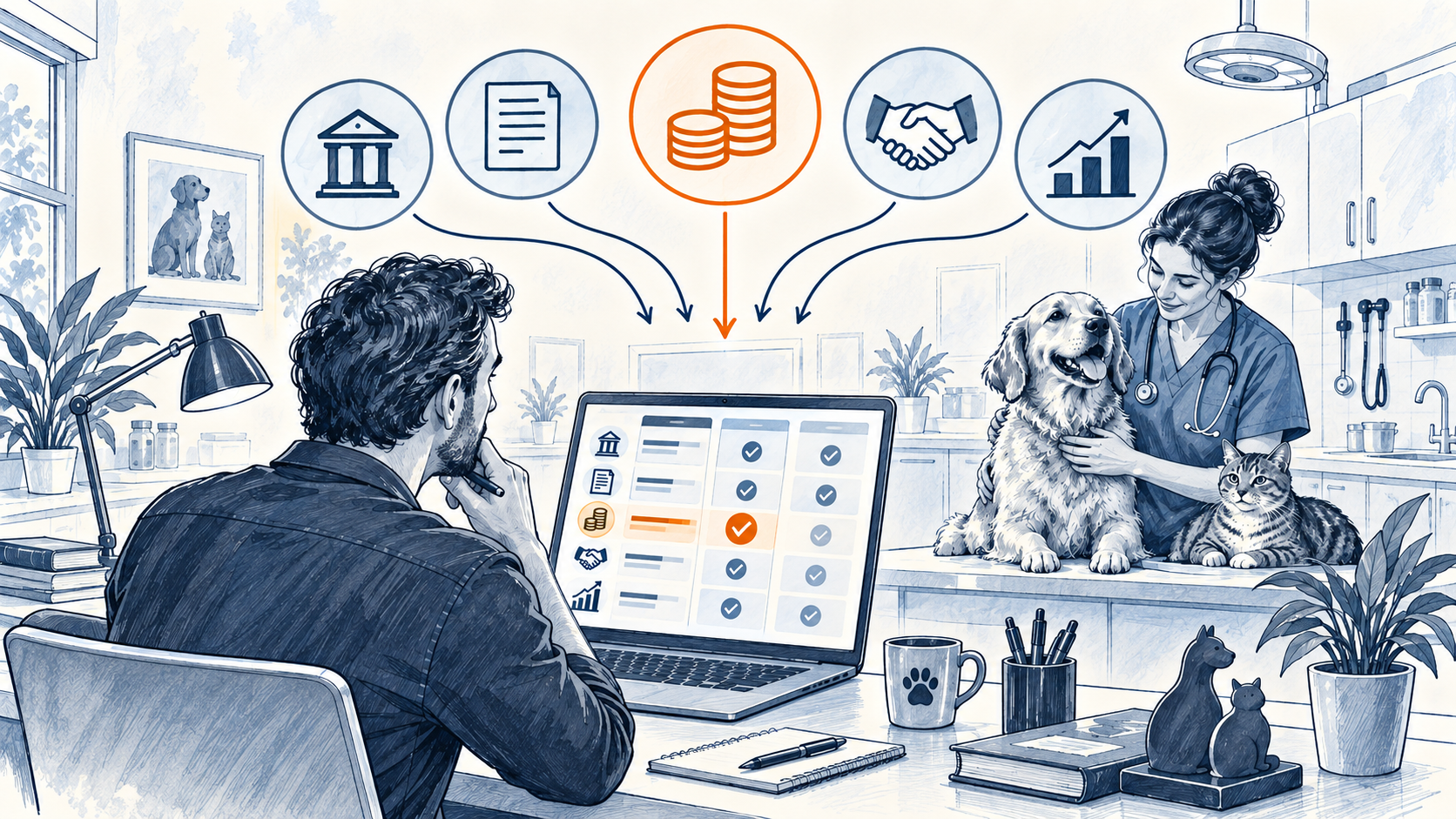
The U.S. medical equipment financing market is estimated to reach $80.44 billion in 2026, and 84% of all medical equipment acquisitions move through a financing arrangement rather than a direct cash purchase. A new high-field MRI system exceeds $1.2 million before installation, making financing the standard capital strategy rather than the exception.
This report compiles 2026 pricing benchmarks and verified lender rate data across the most common medical equipment categories. Each section below adds detail, moving from broad equipment cost ranges to the specific approval criteria that determine what a practice will actually pay to finance.
Key Takeaways:
- Medical equipment costs range from $12,000 for entry-level C-arm units to more than $3M for high-field MRI systems, with total first-year ownership for major imaging systems running 30–50% above purchase price after site preparation and service contract costs.
- Financing rates for medical equipment in 2026 start at 6.5% through SBA programs and reach 35% for high-risk borrowers, with the most common rate window falling between 7% and 18% for established practices.
- Healthcare practices with a credit score above 680 and two or more years in operation see approval rates of 78–85% at alternative lenders, with qualifying bank rates starting as low as 6%.
- The global medical equipment financing market will reach $406.87 billion by 2034, growing at a 9.84% compound annual rate from its 2026 baseline.
Medical Equipment Costs by Category: 2026
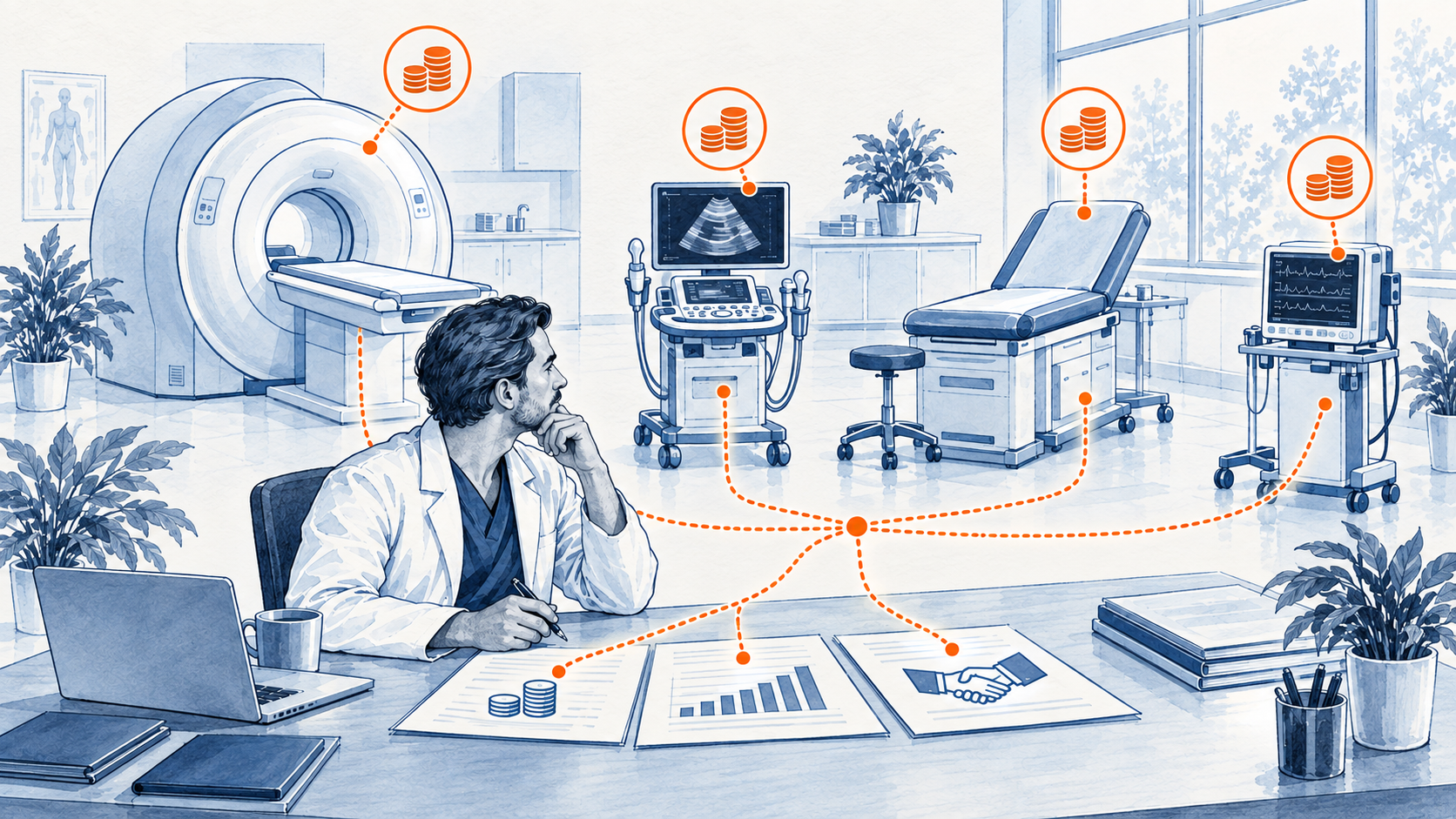
A practice budget for equipment acquisition must account for more than the list price. Site preparation and service contracts each add meaningfully to the total, particularly for high-cost imaging systems. Our data below reflects verified 2026 pricing across the most commonly financed equipment categories.
High-end purchase price by equipment type. Entry-level, mid-range, and service costs remain available to screen readers.
| Equipment Type | Entry-Level | Mid-Range | High-End | Avg. Annual Service Contract |
|---|---|---|---|---|
| MRI Machine (Low-Field) | $150,000 | $400,000 | $700,000 | 8–12% of purchase price |
| MRI Machine (1.5T–3T) | $500,000 | $1.2M | $3M+ | 8–12% of purchase price |
| CT Scanner | $175,000 | $600,000 | $2M+ | $40,000–$120,000/year |
| Digital X-Ray System | $70,000 | $120,000 | $200,000 | $10,000–$30,000/year |
| Portable X-Ray | $28,000 | $55,000 | $90,000 | Varies |
| Ultrasound Machine | $25,000 | $80,000 | $220,000+ | $20,000–$120,000/year |
| PET-CT Scanner | $350,000 | $1.5M | $3M+ | 8–12% of purchase price |
| C-Arm (Full-Size) | $12,000 | $50,000 | $85,000 | Varies |
| Robotic Surgery System | $1.5M | $2M | $2.5M+ | Per service contract |
| Endoscopy System | $50,000 | $100,000 | $150,000 | Varies |
Key Insights:
- MRI installations commonly require $100,000–$500,000 in site preparation costs covering RF shielding and structural reinforcement, pushing total acquisition costs well above the equipment price alone.
- A full C-arm starts at $12,000, making it the most accessible major imaging option for outpatient clinics, while a robotic surgery system demands a capital commitment of $1.5M or more.
Medical Equipment Financing Rates by Lender Type: 2026
The rate a healthcare business qualifies for reflects its credit profile, revenue history, and the lender category it approaches. Rate spreads across lender types are significant in 2026, and choosing the right lender structure determines both the cost of capital and access speed. Our data below shows current rate ranges, terms, and borrower fit for each major lender category.
| Lender Type | Rate Range | Typical Term | Min. Credit Score | Down Payment | Best Suited For |
|---|---|---|---|---|---|
| SBA 504 | 6.5%–8.5% | 10 years | 680+ | 10%+ | Large imaging equipment purchases |
| Bank / Credit Union | 6%–12% | 12–60 months | 700+ | 10–20% | Established practices with strong credit |
| Direct Lender | 10%–25% | 6–84 months | 600+ | 0–10% | Practices that need fast decisions |
| Alternative Lender | 15%–35% | 6–24 months | 550+ | 0% | Newer or credit-challenged practices |
Key Insights:
- SBA and bank financing offer the lowest rates but take weeks to close and require more demanding documentation, making them better suited to planned equipment purchases than urgent needs.
- National Business Capital operates as a direct lender with medical equipment financing up to $15M, a minimum FICO score of 600, and funding timelines of 2 to 8 weeks after approval.
Medical Equipment Financing Approval Rates by Credit Profile: 2026
Approval outcomes and rates both shift based on how a practice presents its financial profile to lenders. Practices that understand where they fall on the approval spectrum enter lender conversations with realistic expectations and a clear fit. Our analysis below organizes 2026 approval benchmarks by credit score range.
Alternative-lender approval rate by FICO range; bank benchmark and typical rate shown with each profile.
| FICO Score Range | Approval Rate (Alt. Lenders) | Approval Rate (Banks) | Typical Rate | Est. Time to Fund |
|---|---|---|---|---|
| 700+ | 80%–85% | 42%–55% | 6%–12% | 1–10 business days |
| 680–699 | 78%–85% | 25%–40% | 10%–18% | 2–10 business days |
| 580–679 | 50%–62% | Rarely approved | 15%–25% | 1–5 business days |
| Below 580 | 25%–35% | Not available | 25%–35%+ | 1–3 business days |
Key Insights:
- Practices with two or more years in operation and consistent revenue see approval rates of 70–82% across lender types, even when credit scores fall in the mid-600s.
- Alternative and direct lenders fund in days rather than weeks, a meaningful advantage when equipment downtime translates directly into lost patient revenue.
Medical Equipment Financing Market Growth: 2026 to 2034
Capital demand for medical equipment continues to expand as healthcare delivery moves toward outpatient settings and advanced surgical technology becomes a competitive standard. North America held 44.64% of the global medical equipment financing market in 2025, and the U.S. market is projected to reach an estimated $80.44 billion in 2026. The table below tracks global and U.S. market projections through 2034.
| Year | Global Market Size | U.S. Market Volume | CAGR | Primary Driver |
|---|---|---|---|---|
| 2025 | $175.18B | ~$78.2B (North America) | Baseline | Technology adoption + aging demographics |
| 2026 | $192B | $80.44B | 9.84% | Diagnostic equipment demand |
| 2028 | Est. $232B | Est. $97B | 9.84% | Outpatient facility growth |
| 2030 | Est. $280B | Est. $117B | 9.84% | Robotic surgery adoption |
| 2034 | $406.87B | Est. $170B | 9.84% | AI-integrated diagnostics |
Key Insights:
- The average medical equipment transaction size grew from $71,000 in 2022 to $87,000 in 2025, driven by rising equipment prices and greater adoption of high-cost diagnostic and monitoring systems.
- With the global market projected to more than double from 2026 to 2034, medical equipment financing will remain one of the most active lending verticals in the healthcare industry.
Further Reading
- Top Medical Equipment Financing Companies: 2026 List
- Top Medical Practice Financing Companies: 2026 List
- Can I Get a Loan to Purchase Medical Equipment?
- Medical Practice Loans: Everything You Need to Know
If you'd like a PDF copy of this report or want to review your medical equipment financing options with a dedicated advisor, National is ready to help you compare structures and identify capital that fits your practice's goals and timeline. Talk to an advisor to explore your options.
Sources
- Medical Equipment Financing Market: Analysis and Forecast 2026 to 2034: Fortune Business Insights
- Equipment Finance Industry Horizon Report 2024: Equipment Leasing & Finance Foundation
- Buying Imaging Equipment in 2026: Guide for Clinics and Hospitals: Spectrum Xray
- Medical Equipment Financing Statistics: Industry Data and Trends for 2026: Crestmont Capital
- Equipment Financing Rates in 2026: Dimension Funding
- Equipment Financing 2026: Rates, Terms and Requirements: Bay Street Lending
- Top Medical Equipment Financing Companies: 2026 List: National Business Capital
ABOUT THE AUTHOR

Joseph Camberato is the CEO & Founder of National Business Capital, where he has led the company in funding more than $3 billion for growth-minded businesses since 2007. With firsthand experience building NBC from a startup into a national private lender, Joe writes on the economic forces shaping access to capital, including interest rate shifts, private credit trends, and the challenges mid-sized companies face when banks pull back.