


Table of contents
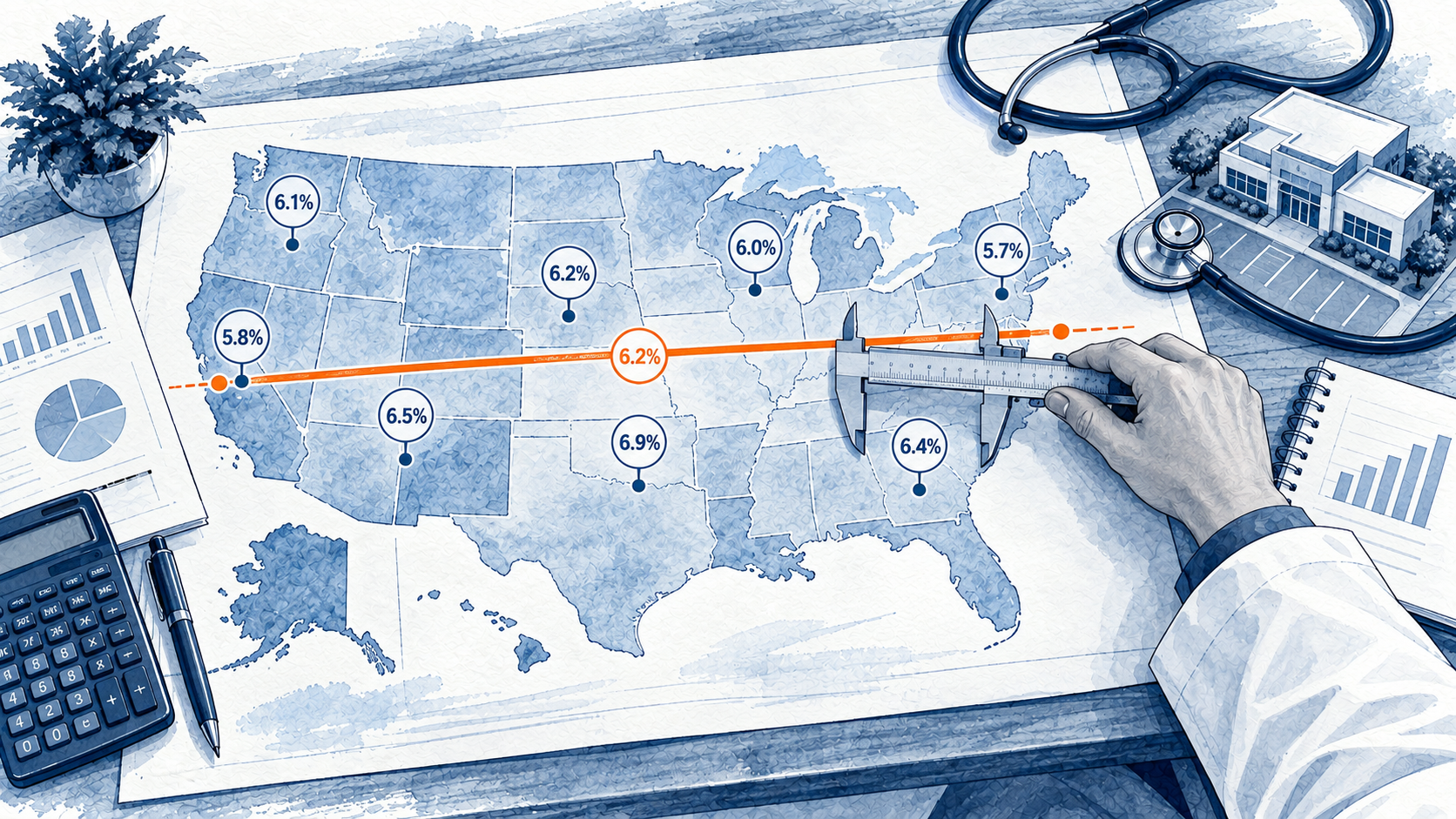
Medical practice loan rates at traditional banks ranged from 6.37% to 10.98% in Q1 2026, according to Federal Reserve Small Business Lending Survey data, with physician-specific programs starting as low as 6.50% fixed and non-bank lenders carrying APRs that can exceed 100%.
National Business Capital compiled rate and qualification data from federal lending surveys and major physician lender programs to develop this 2026 national benchmark. The report gives medical practice owners a clear starting point for evaluating financing options and comparing costs before choosing a structure.
Key Takeaways
- Traditional bank medical practice loans carry the lowest rates in 2026, ranging from 6.37% to 10.98%, but require a minimum credit score of 700 and at least 24 months of operating history.
- Physician-specific programs deliver rates 1.5%–3% lower than what a physician would qualify for through a standard business loan at the same institution. Banks extend that pricing advantage because physician default rates average just 1.8%, compared to 8.5% for general small business loans.
- The Federal Reserve held its benchmark rate steady through all five 2026 meetings as of July, keeping the prime rate at 6.75% and SBA variable rates in the 9.75%–13.25% range.
- Cash flow management drives the majority of medical practice financing decisions. 55% of business owners named cash flow as their top challenge in 2026, a figure nearly unchanged from 2025.
Medical Practice Loan Rates by Financing Type: 2026 National Benchmark
Medical practice loan rates in 2026 span a wide range, and the financing type a practice selects is the primary factor that determines where it lands. Each financing category serves a distinct practice profile with different approval requirements and cost structures. The table below outlines current national rate benchmarks across the four primary financing types.
Rate / APR range on a 0–30% scale. Funding time and minimum history shown per type.
| Financing Type | Rate / APR Range | Typical Funding Time | Minimum History Required |
|---|---|---|---|
| Traditional Bank Loan | 6.37%–10.98% | 30–60 days | 24 months |
| SBA 504 Loan | 7.00%–8.00% blended | 60–90 days | 24 months |
| SBA 7(a) Loan | 9.75%–13.25% variable / 11.75%–14.75% fixed | 45–75 days | 24 months |
| Non-Bank / Alternative Lender | 25%–100%+ APR | Same day–5 days | 6 months |
Key Insights:
- Traditional bank loans and SBA 504 financing offer the lowest cost of capital for established practices, but both carry approval timelines of 30–90 days, making them unsuitable for urgent capital needs.
- Non-bank lenders charge rates that can run anywhere from 2x to over 15x higher than bank options depending on where each borrower falls within the stated ranges. Their products fit short-term cash flow gaps where funding speed justifies the cost.
Physician-Specific Lender Rate Comparison: July 2026
Many national banks operate dedicated physician lending programs priced below the general business loan market. Banks justify the lower pricing because physicians have one of the lowest default rates in commercial lending, at 1.8% versus 8.5% for general small-business borrowers. Our analysis below identifies major physician programs and their current rate structures as of July 2026.
| Lender | Fixed Rate (Starting) | Variable Rate | Maximum Loan Amount |
|---|---|---|---|
| Bank of America Practice Solutions | 6.50% | Prime + 1.25% | $5M+ |
| KeyBank Physician Loan | 6.50% | Prime + 1.75% | $3M |
| TD Bank Physician Program | 6.75% | Prime + 1.50% | $5M |
| Live Oak Bank | 7.00% | Prime + 1.50% | $15M (SBA) |
| PNC Healthcare Business Banking | 7.25% | Prime + 2.00% | $2M |
| Wells Fargo Healthcare Financing | Not published | Prime + 0.75% | $5M |
Key Insights:
- Wells Fargo's variable rate (Prime + 0.75%) delivers the lowest floor rate among major physician programs at approximately 7.50% for qualified borrowers with strong credit profiles.
- Fixed-rate options from Bank of America and KeyBank (both starting at 6.50%) provide the most predictable repayment structure, making them well-suited for practice acquisitions and long-term buildouts.
Qualification Requirements by Financing Type: 2026 Benchmark
Rates carry no value without approval, and lender qualification thresholds vary widely across financing types. Before submitting an application, practice owners need a clear picture of where their financial profile positions them relative to each lender's threshold. The table below reflects current qualification benchmarks for each financing category.
| Financing Type | Minimum Credit Score | Minimum Annual Revenue | Minimum Time in Business |
|---|---|---|---|
| Traditional Bank Loan | 700+ | $250,000+ | 24 months |
| SBA-Backed Loan | 650+ | $120,000+ | 24 months |
| Alternative / Non-Bank Lender | 550–600+ | $240,000+ | 6–12 months |
Key Insights:
- A credit score below 650 limits a practice to non-bank lenders, where APRs start at 25% and climb higher. Moving a score from 600 to 700 opens access to bank and SBA products at a fraction of the cost of alternatives.
- SBA loans offer a viable path for practices with solid revenue but a limited credit profile, accepting scores of 650+ while still delivering rates that compare favorably to traditional bank financing.
Typical Medical Practice Loan Amounts by Use Case
Loan amount determines the rate structure a lender offers and the repayment term that fits the practice's cash flow. Each practice financing purpose carries its own funding range, shaped by how lenders underwrite that specific type of transaction. Our data indicates the following national benchmarks for medical practice financing in 2026.
Share of borrowers by purpose. Typical loan range and term shown per use case.
| Purpose | Typical Loan Range | Share of Borrowers | Common Repayment Term |
|---|---|---|---|
| Practice Acquisition | $300,000–$2M | 40% | 10–25 years |
| Practice Startup | $200,000–$1M | 25% | 7–15 years |
| Partnership Buy-In | $100,000–$500,000 | 20% | 5–10 years |
| Practice Expansion | $100,000–$1M | 10% | 5–15 years |
| Equipment Financing | $50,000–$500,000 | 5% | 3–7 years |
Key Insights:
- Practice acquisitions account for 40% of medical practice loans and have the longest repayment terms. A 1% rate difference on a $500,000 loan over 15 years adds or removes roughly $45,000 in total interest cost.
- Equipment financing carries the shortest terms and often uses the purchased equipment as collateral, reducing lender risk and qualifying some practices for stronger rate structures than their credit score alone would suggest.
Further Reading
- Medical Practice Loans: Everything You Need to Know
- Business Loans for Medical Practices: Essential Funding Guide
- Can I Get a Loan to Purchase Medical Equipment? Yes, Here's How
- Medical Financing Solutions for Professionals
Request a PDF copy of this report to keep this benchmark data accessible for your next capital planning session or advisor conversation.
Sources
- Federal Reserve Bank of Kansas City: Small Business Lending Survey, Q1 2026
- NerdWallet: Average Business Loan Interest Rates, July 2026
- MedMoneyGuide: Physician Practice Loans 2026: Complete Bank Comparison Guide
- Flychain: Your Complete Guide to Healthcare Practice Financing Options, 2026
- Bay Street Lending: Current SBA Loan Interest Rates, July 2026
- Fora Financial: Medical Practice Financing Trends, 2026
ABOUT THE AUTHOR

With over a decade in business lending, Josh leads National Business Capital’s advisor team as EVP of Finance. Having personally structured thousands of funding arrangements, he simplifies the lending journey and guides clients through approvals, capital stacks, funding timelines, and the key questions to ask before signing.