


Table of contents
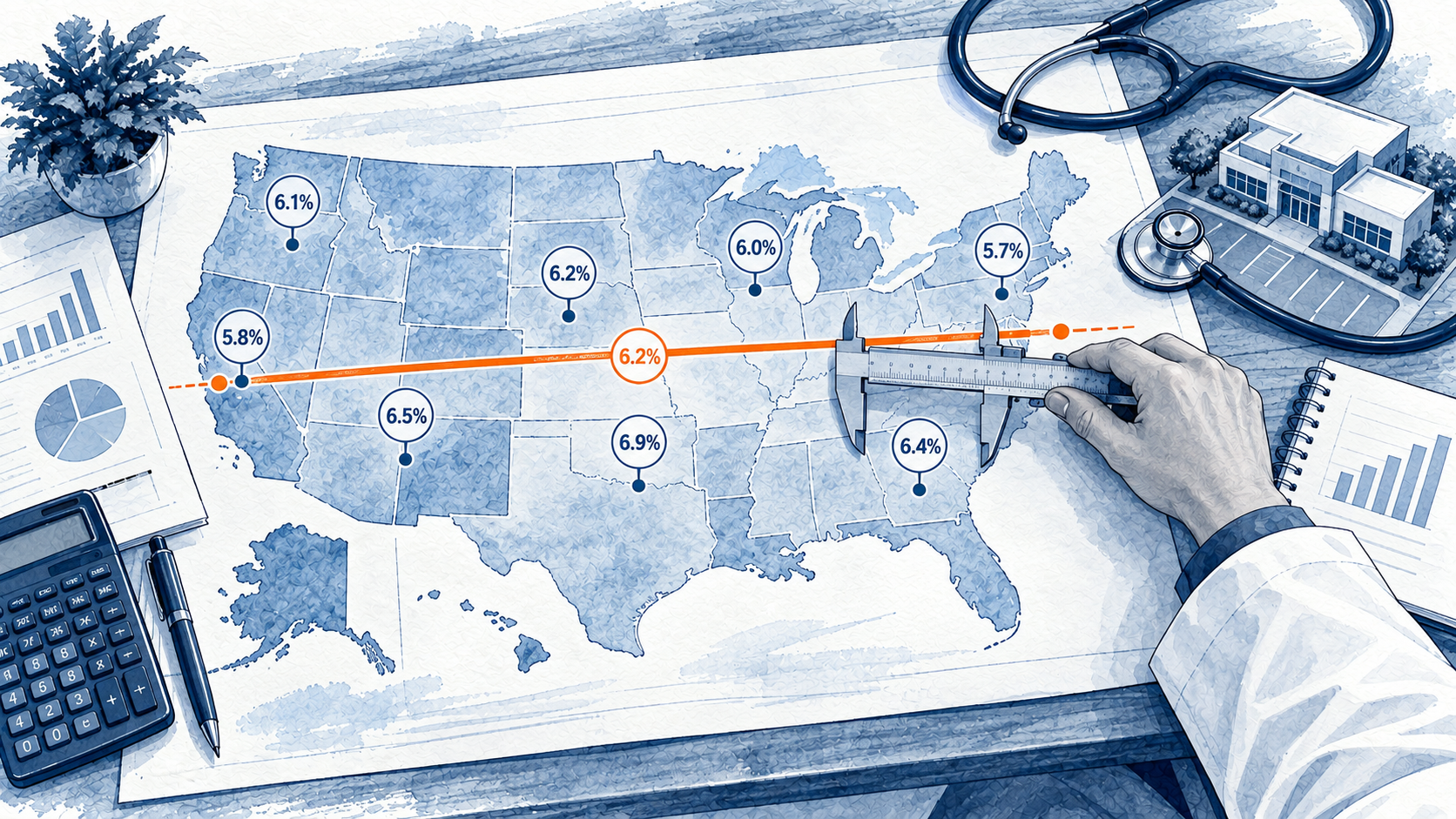
Dental practice loan rates in 2026 range from 6.17% for SBA 504 loans to as high as 14.75% for SBA 7(a) loans under $25,000, with conventional bank acquisition loans typically falling between 7.0% and 9.5% for qualified borrowers. National Business Capital reviewed current SBA rate schedules and lending benchmarks from verified industry sources to compile this report.
The data below compares rate structures across the primary loan types dental practice owners use in 2026.
Key Takeaways
- SBA 7(a) variable rates for loans over $250,000 cap at 9.75% as of July 2026, while SBA 504 rates range from 6.17% to 6.20%
- Conventional dental lenders price acquisition loans between 7.0% and 9.5% for borrowers with a 680+ FICO score and at least 2 years in business
- The average SBA 7(a) loan amount for a dental practice acquisition is approximately $840,000
- According to U.S. Dental Practices, lenders apply a 60/40 underwriting model that puts 60% weight on practice cash flow and 40% on personal financial strength
2026 Dental Practice Loan Rates: Overview by Loan Type
Dental practice owners access capital through several loan structures, and each one prices differently based on loan purpose and borrower profile. The table below provides a side-by-side comparison of the primary options available in 2026.
Interest / APR range by loan type, on a 0–30% scale. Structure and term shown per type.
| Loan Type | Structure | Interest Rate Range |
|---|---|---|
| SBA 504 | Fixed, 10–25 years | 6.17%–6.20% |
| Equipment | Term loan, 12–72 months | 6%–9% |
| Conventional bank | Acquisition, 5–10 years | 7.0%–9.5% |
| SBA 7(a) | Maximum allowable, up to 25 years | 9.75%–14.75% |
| Line of credit | Revolving | 10%–28% |
Key Insights
- SBA 504 loans offer the lowest fixed rates for dental practices in 2026 and are best suited for real estate purchases or large equipment with long useful lives.
- Conventional bank loans close in 30–60 days compared to 45–90 days for SBA loans (U.S. Dental Practices) and often carry a lower effective rate, but require 15%–25% down on goodwill-heavy acquisitions.
SBA 7(a) Maximum Rates by Loan Size (July 2026)
SBA 7(a) loans fund the majority of dental practice acquisitions. The SBA sets maximum allowable rates using the WSJ Prime Rate (6.75% as of July 2026) plus a lender-specific markup. Our data indicates how those maximums apply across loan sizes.
| Loan Amount | Max Fixed Rate | Max Variable Rate |
|---|---|---|
| $25,000 or less | 14.75% | 13.25% |
| $25,001–$50,000 | 13.75% | 13.25% |
| $50,001–$250,000 | 12.75% | 12.75% |
| $250,001–$350,000 | 11.75% | 11.25% |
| Over $350,000 | 11.75% | 9.75% |
Key Insights
- Loans over $250,000 qualify for the lowest SBA 7(a) maximum rates, and most dental acquisitions exceed that threshold by a meaningful margin.
- Dental practices default on SBA loans at lower rates than most other industries, and lenders respond by pricing well-qualified borrowers in the 10%–13% APR range, well below the stated maximums.
Dental Practice Acquisition Financing by Practice Size
Acquisition financing scales with practice size and collections history. Most SBA lenders require a minimum 1.25x debt service coverage ratio (DSCR), and the data below illustrates how loan amounts and equity requirements shift across practice profiles.
Financing ranges by practice size, on a $0–$4M scale. 10% equity injection shown per profile.
| Practice profile | Annual collections | Purchase price | Typical SBA loan | 10% equity injection |
|---|---|---|---|---|
| Solo GP (3–4 operatories) | $0.65M–$0.9M | $0.45M–$0.75M | $0.4M–$0.7M | $25K–$75K |
| Established GP (5–7 operatories, associate) | $1.2M–$1.8M | $0.85M–$1.5M | $0.8M–$1.4M | $45K–$150K |
| Group or specialty (multi-location or specialty) | $2M–$4M | $1.6M–$3.5M | $1.5M–$3.2M | $80K–$350K |
Key Insights
- According to Clarify Capital, the average SBA 7(a) loan amount for a dental practice acquisition is approximately $840,000, reflecting a typical established single-location practice.
- Buyers who bring a 10% equity injection and meet a 1.25x DSCR threshold typically qualify for rates at the lower end of the 10%–13% APR band quoted by most SBA lenders in 2026.
Dental Equipment Financing Rates by Category (2026)
Equipment financing prices differently than acquisition loans. Dental specialty lenders evaluate each request based on the asset's useful life and the borrower's financial position. The table below outlines the financing options for primary dental equipment categories.
| Equipment Category | Best Financing Type | Typical Rate Range | Typical Term |
|---|---|---|---|
| Dental chairs and treatment units | Term loan | 6%–9% | Up to 72 months |
| CBCT and digital imaging | Term loan or operating lease | 6%–11% | 12–72 months |
| CAD/CAM systems | Operating lease | 7%–11% effective rate | 36–60 months |
| Intraoral scanners | Term loan or lease | 6%–9% | 24–60 months |
| IT infrastructure | Term loan or operating lease | 6%–9% | 36–60 months |
Key Insights
- Equipment with a 15-year lifespan, such as dental chairs and sterilization units, typically produces a lower after-tax cost under a term loan than a lease, especially when paired with the 2026 Section 179 deduction limit of $2,560,000.
- Fast-depreciating technology like CBCT and CAD/CAM systems often works better under an operating lease structure, which avoids tying capital to assets that become obsolete before their financing terms expire.
Further Reading
- Dental Practice Loans & Financing Options: Getting Working Capital to Grow
- Top Dental Practice Loans in 2023
- How Small Business Loans Can Help Dentists Grow Their Practices
- Can I Get a Loan to Purchase Medical Equipment? Yes, Here's How
Request a PDF copy of this report to keep this rate data on hand when comparing lenders and building your financing strategy.
Sources
- Lendio – Current SBA Loan Interest Rates July 2026
- NerdWallet – SBA Loan Rates July 2026
- Bay Street Lending – SBA Loans for Dental Practice Acquisition: July 2026 Rates
- Clarify Capital – How to Grow Your Dental Practice in 2026
- IBISWorld – Dentists in the US Industry Data and Analysis
- TransitionOne – The True Cost of Financing a Dental Practice Acquisition
- Dental Practice Insider – Dental Equipment Financing (2026)
- U.S. Dental Practices – Dental Practice Financing & Acquisition Loans
- Crestmont Capital – Loans for Dental Equipment: Financing Your Dental Practice
ABOUT THE AUTHOR

With over a decade in business lending, Josh leads National Business Capital’s advisor team as EVP of Finance. Having personally structured thousands of funding arrangements, he simplifies the lending journey and guides clients through approvals, capital stacks, funding timelines, and the key questions to ask before signing.